


Typography is not just a business; it’s a cultural practice that makes the wide dissemination of written communication possible. From the beginning, ATypI expressed as one of its goals to increase knowledge of type and typography around the world, even if that wasn’t its early focus. As the purpose of the association shifted from legal protection of type designs to the general typographic community, especially after desktop publishing brought type into the hands of anyone with a personal computer, ATypI grew from being an industrial organization to being primarily educational in its purpose.
Aaron Burns’s efforts in the late 1950s to create local chapters and a center for typographic education ended up taking form outside ATypI as he built a structure of typographic outreach in the USA. ATypI’s series of Working Seminars drew educators in each country where they were held. The attempt to set up a triennial competition for typography and type design under ATypI’s auspices was an early effort at outreach.
When conferences and congresses were held at educational institutions, they naturally focused more on education and perhaps less exclusively on business. And from the large Type90 onward, ATypI became more permeable to anyone with an interest in type, not just those who created it or sold it.
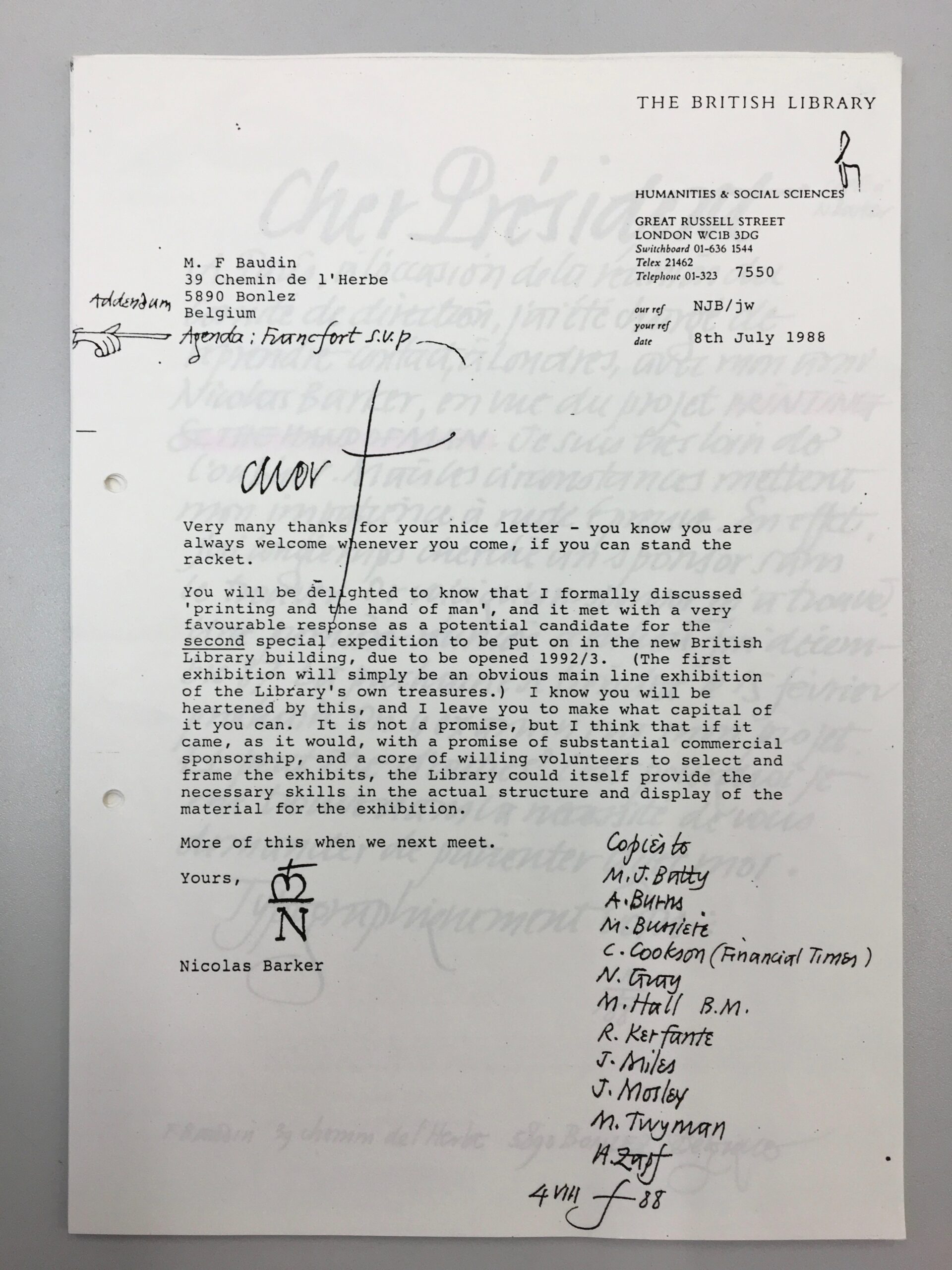
An Education committee was first created by André Gürtler in 1972, and in 1973 the theme of the conference in Copenhagen was “Education in Letter Forms.” Fernand Baudin, who had initiated the Dossier A–Z 1973, pushed repeatedly for an ambitious program that he called “Printing and the Hand of Man,” although this never took solid form through ATypI.
The Board at more than one point considered establishing a speakers’ bureau, a program through which typographic experts could give lectures and workshops under ATypI’s auspices.
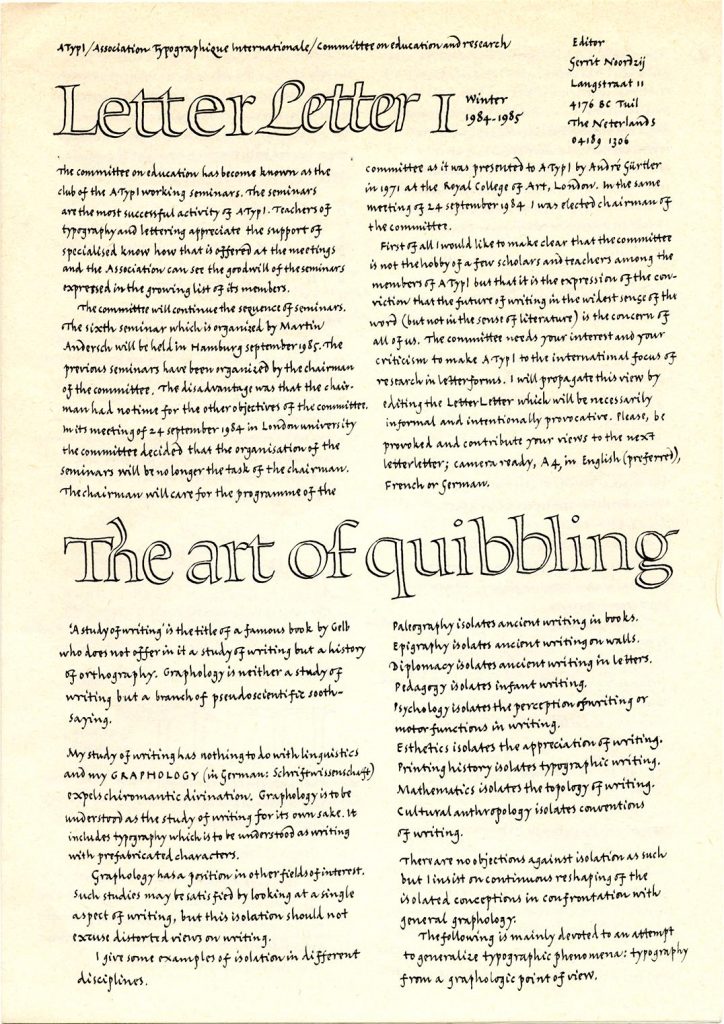
TypeLab, of course, served a hands-on educational purpose. Gerrit Noordzij’s Letterletter was idiosyncratic and sometimes recondite but very much a tool for intellectual education.
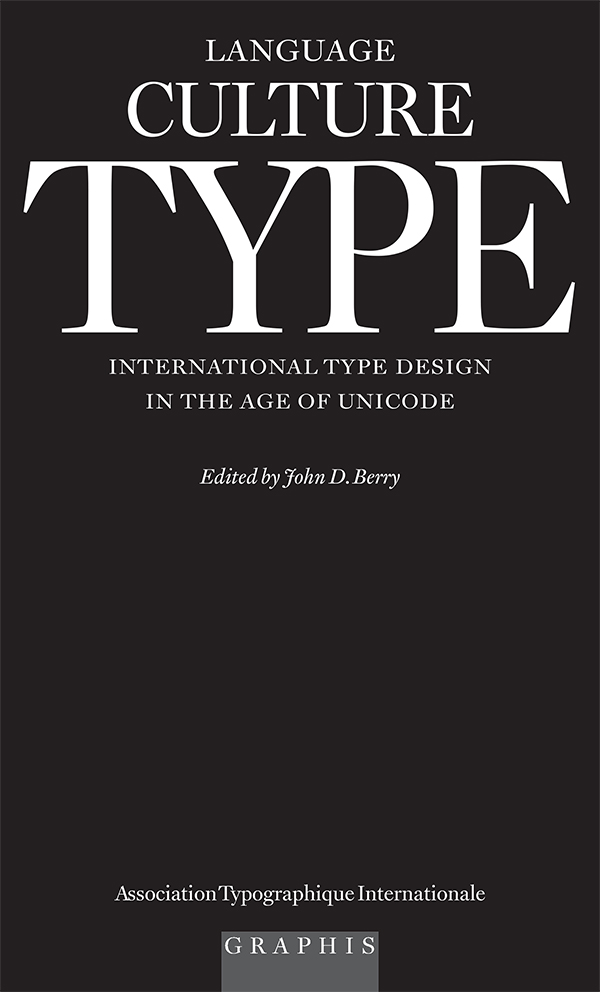
ATypI’s first successful international type-design competition, bukva:raz! led to the publication of the book Language Culture Type, which included essays on type and typography in many different languages, cultures, and scripts from around the world, along with winners of the competition.
At some point, the annual conferences began to include an “education” day either before after the main program, as well as a “technical forum” in a similar (and sometimes simultaneous) format. Members of the Board of Directors were often those who had established academic programs in type education.
When I put myself forward for the presidency in 2007, in my brief platform I explicitly described ATypI’s purpose as primarily educational, both in academic programs and in the general society.